these posts intend to invoke radical perspectives towards contemporary challenges of life, envisaging the coming of a just world today and now in our midst...
Wednesday, February 19, 2020
Monday, February 17, 2020
Theophany of the Living God versus Theocracy of the Ungods!
![]() |
| Bradley Platz's The Golden Calf |
[Reflections on Exodus 24:12-18 & 32:1-6]
The Good God and the Evil God met on the mountain top.
The Good God said, “Good day to you, brother.”
The Evil God did not answer.
And the Good God said, “You are in a bad humour today.”
“Yes,” said the Evil God, “for of late I have been often mistaken for you,
called by your name, and treated as if I were you, and it ill-pleases me.”
And the Good God said,
“But I too have been mistaken for you and called by your name.”
The Evil God walked away cursing the stupidity of man.
Kahlil Gibran, The Good God and The Evil God [1]
The struggle to choose between the Living God and the Ungod is as old as humankind. As Kahlil Gibran’s poetic lines very beautifully portray, humankind has often mistaken Living God to the Ungod. The prescribed Biblical text, when read in its entirety, is all about such a historical friction in the choice between Living God and Ungod. Therefore, I would like to invite you to reflect with me on the theme, Theophany of the Living God versus Theocracy of the Ungods!
The first part of the text (Exodus 24:12-18) is a very dramatic and spectacular screenplay that is believed to have been played on a high mountain stage which was called Sinai. The previous passage tells us that the People had seen the Lord at Sinai. It was a Theophany – God’s visible manifestation to the people. It was an experience of life. You can see, the elements of the nature that appear in the text are all the symbol of life: Earth, Sky, Fire, Light, Air… everything…They are all symbolizing the presence of the Living God. God’s life is manifested in a spectacular way at Sinai. Interestingly, Biblical scholars do not come to a conclusion about the exact geographical location of mount Sinai. That uncertainty gives us the gift of imagining Sinai as a non-location-bounded space, as against to the Mount Zion. The Reform Judaism even today believes that Sinai is a non-location-bounded space, in other words, a borderless space/ a non-bordered entity. That is why perhaps the diaspora Jews of Reform Judaism in different parts of the world imagine the idea of Temple Sinai. In that sense, Sinai is a borderless temple – it’s a radical imagination of God’s borderless dwelling. God cannot be static like an Empire to be within the border. The Theophany at Sinai manifests that God is borderless.
Now interestingly, while the borderless life of God was getting manifested at Sinai there was something extremely opposite was happening underneath the mountain. What was that? The second part of our reading tells us that it was a border-building… A border was erected by the lifeless forces, the forces of death, the forces of illusion, the forces of glittery imaginations… In other words, an Empire was getting built by the people of God. The making of the Golden Calf and the worship of an Ungod! Golden Calf as an Empire!
Wait! Here we need to take a conscious break. Let us make a deliberate pause here and ask ourselves a few important questions: How can we possibly jump into the conclusion that the worship of Golden Calf was sinful? Are we not proposing Yahweh worship as Normative spirituality whereas the Golden Calf worship as deviant spirituality? In fact, the idea of Golden calf was borrowed from the Canaanite spirituality. The spirituality of the occupied land and the people! The Spirituality of the Colonized! Are we not demonizing an indigenous spirituality in our attempt to talk about the ‘living God’ of the Israel? And if you read further in the same chapter 32, what happens to the Golden Calf worshippers is nothing but a genocide. Massacre of about 3000 people. Bloodshed. Killing. In verse 27 onwards Moses says to the sons of Levi: "Put your sword on your side, each of you! Go back and forth from gate to gate throughout the camp, and each of you kill your brother, your friend, and your neighbor." The sons of Levi did as Moses commanded, and about three thousand of the people fell on that day. And Moses said, "Today you have ordained yourselves for the service of the Lord, each one at the cost of a son or a brother, and so have brought a blessing on yourselves this day." Does killing my brother, my sister, my son, my daughter, my neighbor bring blessing to me?
What an anarchic act it was! What a brutal belief! Are we justifying such a brutal genocide of about 3000 people, just because they had a ‘different’ spirituality? Is such bloodshed orchestrated by the living God? If yes, can such God be a living God? Do we need that God who takes pride and pleasure in the bloodshed and genocide?
Well, let us come back from our deliberate break! Let us now consciously confess, what Israelites did on that day was not godly; it was brutally ungodly. The living God would never orchestrate such a brutal act of killing/genocide. Therefore, we need a different strand to read these scenes: On the one hand the spectacular scene of the Theophany of the living God at Sinai and on the other hand the ruthless, vicious, heartless scene of the genocide by the people of living God.
We must remember that the Theophanies in the book of Exodus happen in the context of the Empire. The immediate context of the people was the years-long suffering under the empire of Pharos. We may have to compare the earlier Theophany at the Mount Horeb in Exodus 3 with this Sinai Theophany. We could see a huge shift in focus. In the Horeb Theophany of Exodus 3, the focus was: Liberation: “let my people go.” The Theophany that led to the beginning of a liberation movement. But the focus of the Theophany of our text today is totally different: It is about the commandment!: “I will give you the tablets of stone, with the law and the commandment, which I have written for their instruction.” Now we must ask, why does, after all, a liberated community need law, commandments and instruction? It tells us something very profound. It tells us that the liberated community was no longer a liberated community. It tells us about the prevalence of injustice within the liberated community. Therefore, the divine justice of liberation had to be replaced by the legal justice of the commandments. Remember, the commandments are the moral codes for the colonizers. Colonial history, history of the Empires, tells us that. It was a clear indication that Israel, the liberated community was becoming an Empire, a colonial power. When the liberation movement becomes a colonial power, such massacres do happen. In other words, when the Theophany of the living God is not understood and embraced rightly, the Theocracy of the Ungods does happen. Therefore, the making and worshipping of the Golden Calf must be understood as the sign of Israel’s desire to be an Empire. The worship of the Golden Calf was nothing but the fetishization of religion and spirituality. It was the rejection of the living God and the celebration of the Ungod!
The history of Christianity is evident for the worship of Ungods on the one hand and for the massacre of indigenous spirituality on the other. Sebastian Kappen, an Indian-Jesuit theologian says, “Ungod is the God whom Christians fashioned to legitimize their lust for wealth and power. It is the Christian ungod who authorized the Christian kings to colonize and enslave all pagan nations and to exterminate indigenous tribes of Americas and the Pacific. It is the Christian ungod who permitted the Trans-Atlantic slave trade involving more than 30 million Africans. In short, the Christian ungod is a god who takes the side of the affluent and powerful against the vulnerable, a god with hands dripping with the blood of the innocent.”[2]
The colonial Christianity, often did not introduce the living God manifested in the liberating Christ to the indigenous communities. Rather, it introduced Ungods, Colonial Christs. A voice from Africa unveils this historical truth very powerfully. Vincent Gordon Harding, an African-American historian and social activist, describes the encounter of the enslaved Africans with the colonial Christ in these words: “We first met this Christ on slave ships. We heard his name sung in praise while we died in our thousands, chained in stinking holds beneath the decks, locked in with terror and disease and sad memories of our families and homes. When we leaped from the decks to be seized by sharks we saw his name carved in the ship’s solid sides. (the name of Christ!). When our women were raped in the cabins, they must have noted the great and holy books on the shelves. (the Bible!). Our introduction to this Christ was not propitious and the horrors continued on America’s soil.”[3]
Today we continue to experience the horrors of the Empires. And we also inherit such colonial horrors and scars on our bodies and minds in a colonial and postcolonial context like that of Pacific. The colonial Christianity, though claimed to believe in the Theophanies of the Living God, in reality it did establish a Theocracy of ungods by nullifying, erasing and massacring indigenous spiritualties. For a Samoan novelist Albert Wendt, the Samoan indigenous spirituality was found in fluid humour and laughter and not in rigid commandments and laws. He argues that the rigid Christian morality was the ungod that the Colonial Christianity brought to the Pacific. He says, “The missionaries (and all other puritans) brought pornography by instilling in us the bourgeois morality of Europe, making us ashamed of the very stories and situations which made us laugh. The puritan would have us believe that one does not exist below the navel. According to a poet friend, “The missionaries came with a Bible in one hand, and a chisel in the other.” True Samoan humour went underground and remains there in those circles we call “respectable.”[4] The bourgeois morality of Europe, or call it Victorian morality, was the ungod that the colonial Christianity used as a chisel to massacre the indigenous spiritualities.
When we identify the ungods within and among us, we are challenged to reclaim the Living God that manifested on the Mount Sinai, Mount Horeb and on the mount of transfiguration where Jesus embodies the living God and continues to fight against the ungods. The borderlessness of divine Theophany must enable us to identify the bordering Ungods within us and among us. We must strive to regain our ability to distinguish between the borderless God of life and the bordered Ungods of power, prosperity and the superiority of gender, race, ethnicity and spirituality. Our faith in the living God demands us to redeem our churches, our theologies, our spiritual practices from the worship of the Ungods. Our faith in the Living God is a faith of re-imagination. May we re-imagine a decolonized borderless Christ who enables us cherish the life in our indigenous spiritualties without compromising with the Empires of our time. Let us experience the Theophany of the living God today in our midst so that we may discard all the ungods that we may be worshipping knowingly or unknowingly.
To conclude, let us go back to yet another prose-poetry by Kahlil Gibran, Garments, but with a little variant:
Upon a day Beauty (read, Living God) and Ugliness (read, Ungod) met on the shore of a sea. And they said to one another, “Let us bathe in the sea.”
Then they disrobed and swam in the waters. And after a while the Ungod came back to shore and garmented himself with the garments of the Living God and walked away.
And the Living God too came out of the sea, and found not her raiment, and she was too shy to be naked, therefore she dressed herself with the raiment of the Ungod. And the Living God walked her way.
And to this very day men and women mistake the one for the other.
Yet some there are who have beheld the face of the Living God, and they know her notwithstanding her garments. And some there be who know the face of the Ungod, and the cloth conceals him not from their eyes.[5]
Then they disrobed and swam in the waters. And after a while the Ungod came back to shore and garmented himself with the garments of the Living God and walked away.
And the Living God too came out of the sea, and found not her raiment, and she was too shy to be naked, therefore she dressed herself with the raiment of the Ungod. And the Living God walked her way.
And to this very day men and women mistake the one for the other.
Yet some there are who have beheld the face of the Living God, and they know her notwithstanding her garments. And some there be who know the face of the Ungod, and the cloth conceals him not from their eyes.[5]
May the living God enable us to be that someone who cannot be deceived by the glittery garments of the Ungod of our time!
[1] Kahlil Gibran, The Madman in The Complete Works of Kahlil Gibran, New Delhi: Cross Land Books, 2015, 149.
[2] Sebastian Kappen, Spirituality in the Age of Reconciliation, Bangalore: Visthar, 1995, 3.
[3] Vincent Harding, “Black Power and the American Christ”, in The Black Power Revolt, edited by Floyd Barbour, Boston: Beacon Press, 1969, 86.
[4] Cited in Tui Atua Tupua Tamasese Ta’isi Efi, “Whispers and Vanities in Samoan Indigenous Religious Culture” in Whispers and Vanities : Samoan Indigenous Knowledge and Religion, edited by Tamasailau M. Suaalii-Sauni...(et.al.), Wellington: New Zealand Huia Publishers, 2014, 15.
[5] Kahlil Gibran, The Wanderer in The Complete Works of Kahlil Gibran, New Delhi: Cross Land Books, 2015, 51-52.
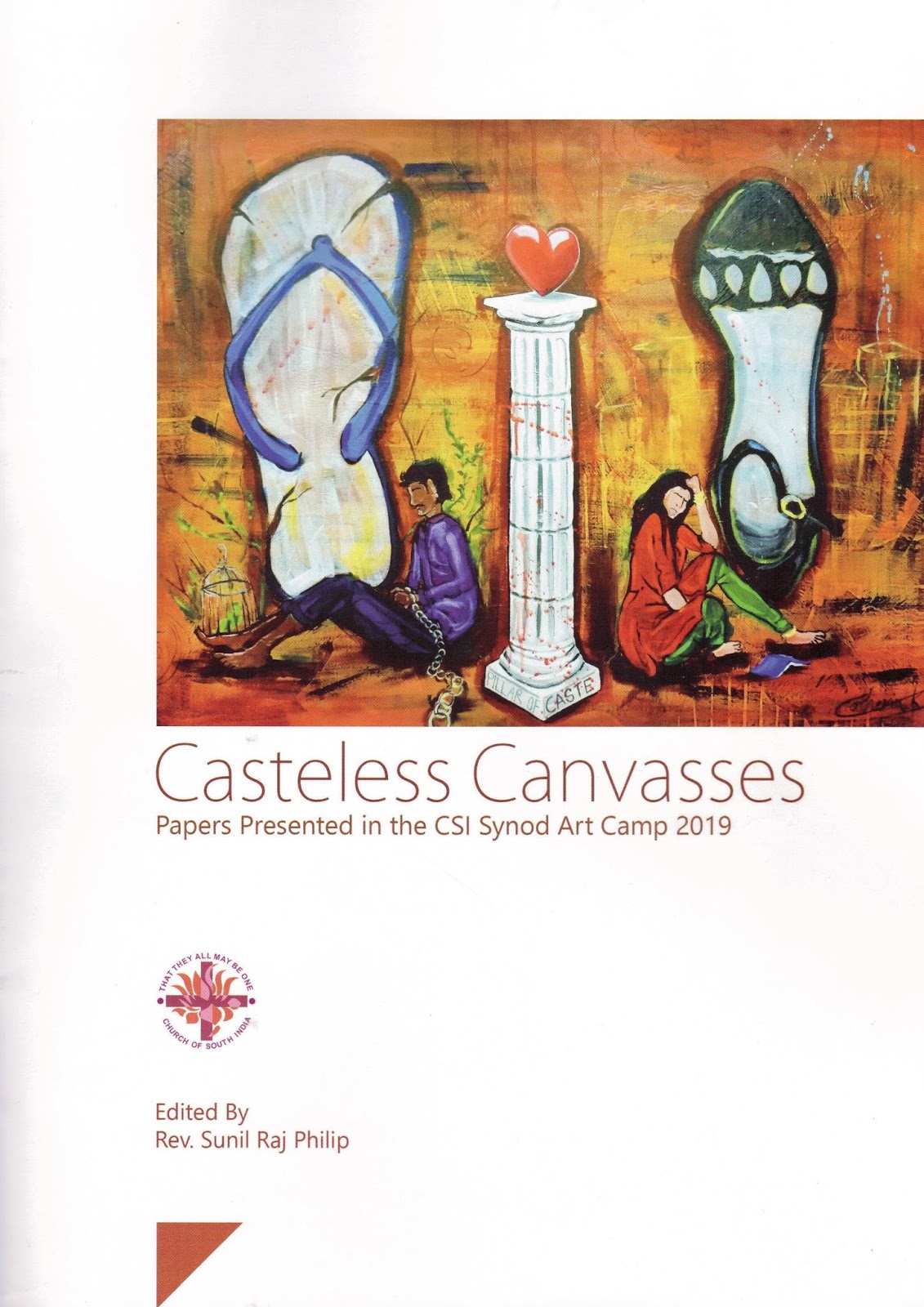
Tuesday, January 28, 2020
"UNSETTLING THE SETTLER WITHIN" : Reimagining Theological Education
MINISTERIAL
CHALLENGES IN THE CONTEMPORARY WORLD: TOWARDS A TRANSFORMATIVE THEOLOGICAL
EDUCATION, by Limuel Equina and Wati Longchar (eds.). Serampore: PTCA &
ATESEA, 2019. xv+286 pages. Appendix to p. 312. No index.
![]() |
| Rev. Dr. H.S.Wilson |
Programme
for Theology and Cultures in Asia (PTCA) and Association for Theological
Education in South East Asia (ATESEA) have together come out with a magnificent
gift to the theological academia and to the churches at large in the form of a
huge volume, Ministerial Challenges in
the Contemporary World:Towards a Transformative Theological Education. The
uniqueness of this volume is: it comes very fittingly as a Festschrift to
celebrate the inspiring life and the immense contributions of Rev. Dr. Henry
Steward Wilson (popularly known as HS), the Executive Director of the
Foundation for Theological Education in South East Asia (FTESA), to the
theological education at global level. The editors of the volume, Limuel Equina
and Wati Longchar, introduce the contents and concerns of the book as the
subjects that are “close to the heart of HS Wilson whose unrelenting advocacy
for theological education transcends parochialism, egocentricism and
selftriumphalism of Christendom in the service of Christian mission for the
world” (vii).
The
volume consists of 21 articles contributed by friends and colleagues of HS, apart
from an inspiring narrative of his life and ministry by Bishop Christopher L.
Furtado. The contributions are divided into two sections based on their content
and focus. The first section focuses on the critical evaluation of theological
education in different parts of the world and most particularly in the Asian
context. Most of the contributors in this section locate their reflections on
theological education particularly in an evidently postcolonial context. The
colonial baggage that the theological institutions and curriculum carry is
critically analyzed and the decolonization of theological educational space is
vehemently demanded. It also calls forth a self-reflexivity on the part of the descendants
of settler colonials to “unsettle the settler within”(p. 10) in order to be true
companions in theological education in a colonized context. As it is opined, such
“a process of decolonization is essential before new possibilities in theological
education will emerge”(p. 17).
Revisiting theological curriculum to develop more engaged and embodied pedagogies is another important concern of this section. It is argued that “the development of theological curriculums needs to develop engaged pedagogies” which equips theological institutions “to be a place for the practice of embodied freedom” (p. 32). Many authors in this section express their displeasure with the present pedagogies that are practiced in theological education and find them repressive and irrelevant to the diverse contexts of learning. As one of the contributors from Africa argues, “theological education curriculum needs to be critically reviewed in light of present needs, global pressures and technological innovations,so are to be relevant in leadership development for the African church” (p. 64). Hence she calls it “curriculum reform” emphasizing that a radical shift is essential taking into account the often un-reflected cultural, epistemological and denominational presuppositions and attitudes (p. 74). An Indian theological educator takes this further in her article by highlighting the elitist nature of the theological curriculum and thus demands “a restructuring of education system from teacher-centred to learner-centred; from elitist-centred to peoples-centred” (p. 141). She believes that such an epistemological shift in theological curriculum can play a crucial role in liberating people from dehumanization. An emphasis, thus, is placed on transforming the education system “in order to transform the marginalized people” (p.141).
![]() |
| This Review could be found in SATHRI Journal:A Journal of Contextual Theology Vol.XIII. No.2, October 2019: 108-112. |
While
reflecting upon the (ir)relevance of theological education in a constantly
changing contemporary context, the volume spells out loudly the need for an unrestrained
theological space which is foundational to make theological education
appealingly relevant. But how does it happen when theological education is
often controlled by the ecclesiastical institutions? As one of the authors
rightly observes, “as long as theological education is under the control of the
institutional church and its institutional ministries,and as long as
theological education is spelt out within the framework of the institutional
church, it is difficult for theological education to become a creative,
relevant, liberative and edificatory process” (p. 84). The creative, liberative
and transformative space of theological education, thus, needs to be reclaimed
in order to be true to our calling as theological educators as “theological
education is to train people for God’s mission and to nurture people and churches
with an alternative consciousness about life and the world” (p. 45). The
alternative consciousness will enable the minds “to read the signs of time and
be fully attentive to the prophetic call of God for change and transformation
in society” (p. 98). It is observed that in the context of Asian theological
education such a discernment of the signs of time is rarely seen because there
is a sense of disempowerment experienced by many Asian theological students (p.
120-121). Therefore, the volume upholds the need for a radical transformation
within the theological educational space where creativity, freedom and
self-reflexivity are celebrated as against to the celebration of institutional
interests and control.
Talking about the role of partnership in theological education, this section affirms that “partnership is a Christian self-understanding that is constantly shaped by one’s sense of being in relation with people and all of God’s creation” (p. 41). Moving beyond international and interdenominational partnership, the contributors reimagine an interdisciplinary and intersectional partnership. As it is experienced that theological education has a drastic impact on the education of the wider society, there is a need for partnership between theological education and higher education because “the challenges affecting the wider society are impacting education and all the stakeholders – i.e., the institutions,the students and their families, the government and related agencies,the communities and non-government groups, etc.” (p. 155). This realization challenges theological education to engage in interdisciplinary partnership with ‘secular’ universities on common issues such as climate change, sustainable development and so on and to prove the unprecedented impact that theological education can make on the future of human society and the life of this planet(p. 171). The volume also asserts that such a daring act of moving out from its rigid and bordered frameworks will enable theological education to take its own curriculum more serious and genuine.
Apart from these focuses the volume also critically looks into the unpretentious perspectives in terms of doing theology in the context of religious plurality. As one of the contributors suggests that we need to “seek new horizons for theological education towards making a credible theological response to religious plurality.”(189). It also critically examines the dominant mission and evangelism ideals that theological students carry while studying world religions and calls for a more engaged and ‘live-in’ experiences within our theological educational space.
Considering the invaluable interrogations and considerable contributions that H.S. Wilson has made to the ministry and mission of the Church, the second section of the volume very aptly focuses on the ministerial and missiological challenges that the present day churches are facing. This section brings together a variety of perspectives that are hoped to benefit the churches and theological education worldwide and, in particular, the Asian context.Standing with the perspectives shared in the first section, the contributors to this section believe that theology has meaning only when it is lived and practiced both inside and outside the premises of an institutional Church. The ‘lived theologies’ make it possible to develop a new “political imaginary that will allow for the transformation of our communities to become Christ-centered communities of women and men that will offer leadership and action, tempered with Christian respect, concern and caring” (p. 199). Such a possible political imaginary that witnesses the transformed community happening leads the communities to the realization of not just being part of the mission of God but becoming one with God in the mission in God being“part of God’s plan and participating in the triune mind, heart, and soul of God” (p.223). This is the essence of the relationality that the Church is expected to reflect in her ministry and mission with the creation of God.
Some of the reflections in this section share profound insights in the form of devotional thoughts. Making sense of divine intervention in the lives of every Christian at his/her baptism, one of the authors reminds the present church to be true to her baptismal commitment to the God of redemption. As a baptized community the Church is challenged to“make fresh commitments to a world where despite frustration, disappointment, and discontent…we are accompanied…by the God of deliverance and the God of redemption” (p. 233). Such an intervention of the God of redemption and deliverance is evident in the history. While talking about the im/possibility of seeing God as the God of history, one of the contributors reminds that it is of utmost importance to redeem God from colonial historical narratives where God is used to legitimize colonial occupations and evils. As an alternative reading of the history, he argues that God in the historical Jesus overthrows evil and transforms humankind through God’s inclusive love (p. 238). This becomes the imperative for the Church to cooperate with the God of history to make such transformations happen in our time.
Taking such a decolonizing perspective of history, another writer identifies how Christian theology and mission have been dominated by the white androcentric anthropocentricism for centuries. He also rightly points out that “nevertheless, there were no lack of prophetic messages and courageous commitments contributed from faithful servants of God in different generations, to stimulate and move the history and human societies toward hopeful new conditions for human life and the totality of creation” (p. 261). When such prophetic voices in the history are heard and taken seriously, the Church in our time will be proactively involved in “remedying conditions that perpetrate violations through denouncing agents of violence” (270).
The Festschrift in hand not only acknowledges and appreciates the colossal contribution of H. S. Wilson to the theological education and the ministry and mission of the Church at global level, but also attempts to affirm Christian commitment to revitalize theological education and the ministry and mission of the Church through self-reflexive introspections and contextually relevant re-imaginations. The contributors to the volume need to be appreciated for their affectionate and academic rendering to their colleague and friend and hence contributing to the theological discussions in diverse ways and perspectives. As readers of this ‘great’ volume, we are invited to celebrate the ‘humble’ life of an ‘ecumenical beggar’, who constantly begs the ecumenical theological community dare to discern the signs of the time, to dream a deviant alternative and to disseminate a radical gospel of peace and justice in a world of troubles and turmoil. Hence, the Festschrift is a must-read for those who really care for the present and future of theological education and its implication for the ministry and mission of the Church.
Talking about the role of partnership in theological education, this section affirms that “partnership is a Christian self-understanding that is constantly shaped by one’s sense of being in relation with people and all of God’s creation” (p. 41). Moving beyond international and interdenominational partnership, the contributors reimagine an interdisciplinary and intersectional partnership. As it is experienced that theological education has a drastic impact on the education of the wider society, there is a need for partnership between theological education and higher education because “the challenges affecting the wider society are impacting education and all the stakeholders – i.e., the institutions,the students and their families, the government and related agencies,the communities and non-government groups, etc.” (p. 155). This realization challenges theological education to engage in interdisciplinary partnership with ‘secular’ universities on common issues such as climate change, sustainable development and so on and to prove the unprecedented impact that theological education can make on the future of human society and the life of this planet(p. 171). The volume also asserts that such a daring act of moving out from its rigid and bordered frameworks will enable theological education to take its own curriculum more serious and genuine.
Apart from these focuses the volume also critically looks into the unpretentious perspectives in terms of doing theology in the context of religious plurality. As one of the contributors suggests that we need to “seek new horizons for theological education towards making a credible theological response to religious plurality.”(189). It also critically examines the dominant mission and evangelism ideals that theological students carry while studying world religions and calls for a more engaged and ‘live-in’ experiences within our theological educational space.
Considering the invaluable interrogations and considerable contributions that H.S. Wilson has made to the ministry and mission of the Church, the second section of the volume very aptly focuses on the ministerial and missiological challenges that the present day churches are facing. This section brings together a variety of perspectives that are hoped to benefit the churches and theological education worldwide and, in particular, the Asian context.Standing with the perspectives shared in the first section, the contributors to this section believe that theology has meaning only when it is lived and practiced both inside and outside the premises of an institutional Church. The ‘lived theologies’ make it possible to develop a new “political imaginary that will allow for the transformation of our communities to become Christ-centered communities of women and men that will offer leadership and action, tempered with Christian respect, concern and caring” (p. 199). Such a possible political imaginary that witnesses the transformed community happening leads the communities to the realization of not just being part of the mission of God but becoming one with God in the mission in God being“part of God’s plan and participating in the triune mind, heart, and soul of God” (p.223). This is the essence of the relationality that the Church is expected to reflect in her ministry and mission with the creation of God.
Some of the reflections in this section share profound insights in the form of devotional thoughts. Making sense of divine intervention in the lives of every Christian at his/her baptism, one of the authors reminds the present church to be true to her baptismal commitment to the God of redemption. As a baptized community the Church is challenged to“make fresh commitments to a world where despite frustration, disappointment, and discontent…we are accompanied…by the God of deliverance and the God of redemption” (p. 233). Such an intervention of the God of redemption and deliverance is evident in the history. While talking about the im/possibility of seeing God as the God of history, one of the contributors reminds that it is of utmost importance to redeem God from colonial historical narratives where God is used to legitimize colonial occupations and evils. As an alternative reading of the history, he argues that God in the historical Jesus overthrows evil and transforms humankind through God’s inclusive love (p. 238). This becomes the imperative for the Church to cooperate with the God of history to make such transformations happen in our time.
Taking such a decolonizing perspective of history, another writer identifies how Christian theology and mission have been dominated by the white androcentric anthropocentricism for centuries. He also rightly points out that “nevertheless, there were no lack of prophetic messages and courageous commitments contributed from faithful servants of God in different generations, to stimulate and move the history and human societies toward hopeful new conditions for human life and the totality of creation” (p. 261). When such prophetic voices in the history are heard and taken seriously, the Church in our time will be proactively involved in “remedying conditions that perpetrate violations through denouncing agents of violence” (270).
The Festschrift in hand not only acknowledges and appreciates the colossal contribution of H. S. Wilson to the theological education and the ministry and mission of the Church at global level, but also attempts to affirm Christian commitment to revitalize theological education and the ministry and mission of the Church through self-reflexive introspections and contextually relevant re-imaginations. The contributors to the volume need to be appreciated for their affectionate and academic rendering to their colleague and friend and hence contributing to the theological discussions in diverse ways and perspectives. As readers of this ‘great’ volume, we are invited to celebrate the ‘humble’ life of an ‘ecumenical beggar’, who constantly begs the ecumenical theological community dare to discern the signs of the time, to dream a deviant alternative and to disseminate a radical gospel of peace and justice in a world of troubles and turmoil. Hence, the Festschrift is a must-read for those who really care for the present and future of theological education and its implication for the ministry and mission of the Church.
Tuesday, October 29, 2019
THE SUBVERSIVE AGENCY OF WATER-BODIES IN THE HEALING MISSION OF GOD
2 Kings
5:1-3 and 7-15
(the episode of the healing of Naaman)
Introduction: In 2014
I went to Jerusalem for two months, not as a pilgrim but as a student of the
Swedish Theological Institute in Jerusalem to learn to understand the long time
struggle/conflict between Israel and Palestine. When my relatives and friends heard
about my planned travel to the “holy land” they started calling me up to
request for a gift on my return. I thought I should be taking a huge bag for
carrying the gifts. But then, after listening to their requests, I realized that
a small cabin-bag would be sufficient enough to carry the requested gifts. All
that my friends and relatives wanted from me was a handful of soil from
Jerusalem and a small bottle of water from the river of Jordan! This request
really compelled me to ponder upon the questions related to our faith. I
started wondering why do we, at least in India, believe that the soil of
Jerusalem is holier than the soil of our own lands? Is the water of Jordan
superior than the water-bodies of Tunga river of my village back in India or river
Rewa that flows here in Suva?
Of course, for my Indian Christian friends, this
request was associated with their belief in Jesus who walked in Jerusalem, especially
Via Dolorosa - the way of the cross - and his baptism in river Jordan. This
belief can be contested. However, let us not get into that discussion now. But
today’s passage, at its face value, looks like upholding the notion that the
water-bodies of Jordan are more powerful and miraculous than the water-bodies
of Abana and Pharpar of Syria. Does this text really propose a hierarchy of
water-bodies and subscribe to the territorial supremacy of one nation over the
other? Should we hold this text responsible for the contemporary water politics
in the Jordan river basin? Or does it send an entirely different message
altogether? To answer these questions, we need to re-locate the episode of the
healing of Naaman in the larger context of political struggle between Aram and
Israel, most probably during the reigns of Ben Haddad II or III of Aram and
Joram of Israel. When read within such a political context, the text can offer
us several meanings and lessons. Let us concentrate on the three lessons that I
would like to draw from this reading:
1. Healing is a Subversive Act of God
The setting of 2 Kings 5 is at the
time when Aram, Israel’s northern neighbor, enjoyed a certain level of military
supremacy over Israel. The history tells us that Aram was victorious over
Israel during many raids and they would loot wealth and capture people to make
slaves for them. And they wouldn’t spare even young ones. As the verse 2 says,
“the Arameans on one of their raids had taken a young girl captive from the
land of Israel and she served Naaman’s wife.” Hence it is clear that the
relationship between Israel and Aram was of an unequal relationship. To certain
extent, it was a master-slave relationship.
Naaman, in this text, stands as a representational
figure of the military supremacy of the Aram as counter to the young slave girl
of Israel who was captive by Aram. The text calls Naaman as a “great man”,
“commander of the army” and “mighty warrior” indicating his superior position.
However, the text also indicates that this “great man” was in need of healing
because he had leprosy. Interestingly, this great man now is made to look at
Israel (Aram’s hierarchically inferior state) for healing. That’s the beauty
and uniqueness of this text. It indicates that God’s healing is a subversive
act. It subverts the power structures. The healing is found when one’s so
called greatness is critically shaken. Healing is met when one’s superiority
over the other is vehemently subverted. In this process of subversive healing
the water-bodies of the river play a major role.
2. Water-bodies: the Subversive Agents of the Healing Act of God
If we once again go back to the questions that we
raised in the beginning: Why Jordan, and why not Abana and Pharpar? I believe,
the Biblical text here does not uphold in any way the superiority of the
water-bodies of river Jordan to the rivers of Damascus, rather it just invites
an epistemological shift in our understanding of the agency of the
water-bodies. Just like any other water-bodies, river Jordan stands here as an
agency of God’s healing. But an exceptional focus here is that Jordan is not
just an agency, rather it is a subversive
agency of the healing act of God. When the prophet Elisha through his
messenger commands Naaman to go and wash in the river Jordan, Naaman reacts to
the prophet quite arrogantly, because his ego was severely hurt. After all
Elisha is just a prophet of Israel. How can he ignore the commander of Aram’s
army? And how can he possibly command the commander to wash in a river,
particularly the river that flows in the territory of Israel?
Verses 11 and 12
say, But Naaman became angry and went
away, saying, “are not Abana and Pharpar, the rivers of Damascus, better than
all the waters of Israel? Could I not wash in them, and be clean?” He turned
and went away in a rage. So it’s a clear indication that the victorious
military superiority made Naaman to grow arrogant to such an extent that he
even tends to believe and claim that the water-bodies of his territory are
better and superior than the water-bodies of Israel. Now Elisha gives a
terrific blow to this arrogant claim of Naaman on the natural resources like
water-bodies. In such a context as this the water-bodies of Jordan play the
role of a subversive agents that challenge the occupying tendency of Naaman. Naaman’s
arrogance had to be challenged. It was not that the water-bodies of Abana and
Pharpar couldn’t be the agents of healing. But in order to clean Naaman both
within and outside, a territorial shift from Abana to Jordan was necessary.
Thus de-territorializing Naaman leads to a holistic healing of his Self. His
immersion into Jordan has to be seen as his rebirth as a redeemed human being.
3. Water-bodies: the agents of Healing a Hostile Relationship
Jordan or Israel, for Naaman, was his external other
with which he hierarchically disassociated. And moreover, Israel and Aram were
in a hostile relationship for many years. As it is obvious with any Empire,
Naaman saw Israel as an object of enslavement. That made him blind to the pains
and pathos of the enslaved people of Israel. His immersion into river Jordan
was an invitation for him to immerse in the life of his Other. Now being
immersed into the Jordan, Naaman’s flesh was restored like the flesh of a young
boy.
The image of young boy is quite profound here. It is an image that stands
as an opposite of Empire, the empire that often strives to conquer and occupy other.
The image of young boy is an epitome of purity and love and of a just
relationship. The young boy knows no conquer, no territorial superiority, no
political supremacy over others, no war, but only the pure love that embraces
everyone. Verse 15 is quite noteworthy in this whole process of healing. The healed Naaman with all his company
returns to the prophet and gives him the present. Giving presents is a gesture
of profound friendship. The commander who was hostile to his other now embraces
the other as his friends. What a radical healing it was! Indeed the
water-bodies of the river Jordan act as the enigmatic agents of healing a
hostile relationship.
Conclusion: Today we
must feel blessed for God has located us in an Island surrounded by the
water-bodies. These water-bodies constantly remind us our sickness of being
arrogant of our supremacy over others. The water-bodies around us challenge us
by subverting the human power structure where one strives to occupy and enslave
the other. Let us be reminded that the water-bodies invite us to immerse into
the life of the others so that we may understand the pain and pathos of others.
At this point I am reminded of a small story told by my high school teacher: There was a boy who constantly used to
scratch his head. His father found it disgusting. And one day while the boy was
scratching his head in public, his father scolded him saying, “Son, it is so
disgusting. Why do you always scratch your head?” Then the son politely
replied, “well, you see dad, I am the only one who knows it itches.” The
world we are living in is full of itches. To understand other’s itches and
their pain, we need to immerse into the life of our other. The water-bodies
around us remind us that very truth
of life just as they reminded Naaman several years ago.
It has now become a routine for me and Sherly, ever since we entered into this campus, to take an evening walk along
the beaches and sit quietly in front of the huge water-bodies. They tell us every
day that we are all connected to each other. Our roots in the Arabean sea are
connected to the Pacific Ocean. We are no more in the conquering or occupying
relationship, rather we are healed for a friendly relationship, an egalitarian
bond. At the same time the water-bodies invite us dare to immerse in the life
of the Pacific so that we may learn and respond to the joy and pains of the
people in the Pacific. Just as Naaman was challenged to move from Aban and
Pharpar to Jordan, we are also challenged to move out of our comfort zones and
get healed by our known and unknown other. Let the water-bodies around us
continue to challenge and invite us to embrace our other just as a young boy
embraces his other without any prejudice and misconceptions.
Sunday, October 13, 2019
Our Way towards Oceania: Yet Another Journey towards Aniketana...
ಓ ನನ್ನ ಚೇತನ
ಆಗು ನೀ ಅನಿಕೇತನ!
Be unhoused
O my Soul!
After
months of preparation, planning and patient perseverance with the
process of immigration, Sherly and I have finally reached our yet
another temporary destination, the Fiji Islands! Indeed a distant
geographical location from the place of our 'origin'. Yet, surprisingly,
we don't feel unbound to our origin. Perhaps, we were never so
exclusively bound to our place of physical birth. That is why, I think,
'moving out' had never haunted us as a nightmare until today. In fact,
to 'settle down' somewhere permanently is still an unimaginable
thought. We have always been prepared and ready to move out. There is
something divine aesthetic in such a readiness to move out. Is it what
the great poet Rashtrakavi Kuvempu meant when he sang that divine saga
of Aniketana, the Unhoused Consciousness?
Kuvempu wrote his poem Aniketana (the Unhoused Consciousness)
in 1974 and presented his thoughts on the idea of 'universal humanism'
during the convocation ceremony of Bangalore University, which has been
published in the book, Vichaarakranthige Aahwaana (An Invitation to the Revolution of Thoughts) in 1976. This poem was of so much importance to the poet that he even noted, "you can destroy all my works even Sri Ramayana Darsanam (that fetched him "jnanapith award"), but just make sure you retain the message of universal man [sic]"[1] The message of ‘universal humanism’ can
be summarized in the following words of poet himself: “Every child, at birth,
is a universal man [sic]. But, as it grows, we turn it into “a petty man”. It should be
the function of the education to turn it again into the original “universal
man [sic]”.”[2] It
is Kuvempu’s contention that the child which by birth was the universal human is
fettered by us with such constraints as country, language, religion, caste,
race and color. To free it from all these limitations and to transform it into
“the enlightened soul”, the universal human, our education, culture and
civilization should strive hard. All children of the world should become
“unhoused” beings, if the world should continue to live.[3] It
is this vision of universal humanism that makes Aniketana (The Unhoused Consciousness) so
compelling philosophy and practice of life, especially when our
identities are so narrowly constrained and fiercely controlled.
"Be unhoused, O my Soul!" is a call to return to our original being, that is universal humanity.
As Kuvempu asserts every child is a universal human at its birth, it is
our original identity to be universal. But we are made 'petty humans'
driven by the geographical, cultural, religious, linguistic and many
such dividing forces. When our being is transformed into an unhoused
consciousness, we will be able to find our Self in the One that we tend
to construct as our Other. Being in the Fiji Islands, I am reminded
again and again how universal our beings are. The distant geographical
entity does not hinder me from getting connected to this new place of
arrival with that of the place of my origin which is far beyond my
immediate reach. The unhoused consciousness deep within me invites me to
find my origin within the Pacific, a cluster of islands. I have spent a
good amount of my lifetime in a context where
our lives were closely connected to the Sea, her waves and tides, the
breeze
from the beach, the monsoon, and many such factors surrounded by water. I
recognize
my encounters with the Divine through the waters in the Sea, the fishes
in the waters,
the shades and fruits of the coconut trees in the field, the breeze from
the
beaches of the Arabian Sea, and the distinctively multi-religious and
multi-ethnic people of the coastal region. Sea, thus, epitomizes my
relationship
with the divine. Pacific is a place which certainly compels me to
nourish
these divine memories. I think, living close to the sea is highly
rewarding as it demands us to
imagine and invoke our own Self and the Divine through the everyday
experiences of the people whose
lives are defined and designed by the waters, yet are unhoused for a
borderless living. What an aesthetic feeling it is!
With
that sense of divine aesthesis, seated right in front of the Pacific
Ocean, I am just re-chanting those poignant lines of Kuvempu and
exclaiming, what a clarion call it was for the humanity to return to the
humanity! My heart is overwhelmed with gratitue towards my beloved poet
for constantly reminding me to dare to be an unhoused consciousness. If
only the humans take this call seriously the universe will be
transformed into an abode of love and beauty where every individual will
celebrate his/her differences transcending all boundaries and
barriers.
Be unhoused, O my soul!
Only the Infinite be your goal.
Leave these myriad forms behind,
Leave the million names that bind,
A flash piercing your heart and mind,Only the Infinite be your goal.
Leave these myriad forms behind,
Leave the million names that bind,
Be unhoused,O my soul!
Only the Infinite be your goal.
Winnow the chaff of a hundred creeds
Beyond these systems hollow as reeds,
Turn unhorizoned to the Truth that leads;
Be unhoused, O my soul!
Only the Infinite be your goal.
Stop not on the unending way.
Never build a house of clay.
Endless the quest both night and day:
No end, no end to your play!
Be unhoused, O my soul!
Only the Infinite be your goal.
The Infinite cancels its end,
Endless the quest you apprehend
And so, Infinite, you ascend
Be unhoused, O my soul!
Only
the Infinite be your goal.[4]
[1] Kuvempu, Manuja Matha Vishwa Patha (Human Religion, Universal Path) (Mysore:
Udayaravi, 1971), 13.
[2] Kuvempu, Vichaarakranthige Aahwaana (An invitation to the Revolution of Thoughts) (Mysore: Kuvempu Vidyavardhaka Trust, 1976), 7.
[3] Kuvempu, Vichaarakranthige Aahwaana, 9-12.
[4] Kuvempu, Aniketana, trans. by, V.K. Gokak.
[2] Kuvempu, Vichaarakranthige Aahwaana (An invitation to the Revolution of Thoughts) (Mysore: Kuvempu Vidyavardhaka Trust, 1976), 7.
[3] Kuvempu, Vichaarakranthige Aahwaana, 9-12.
[4] Kuvempu, Aniketana, trans. by, V.K. Gokak.
Friday, July 6, 2018
ದೆಬೋರಾ: ಉರಿಯುವ ಬೆಂಕಿ
(ನ್ಯಾಯಸ್ಥಾಪಕರು 4:1-16)
ಜ್ಯೋತಿ ಸಿಂಗ್ ಪಾಂಡೆ ಎಂಬ ಹೆಸರು ನಮ್ಮಲ್ಲಿ ಎಷ್ಟು ಜನರಿಗೆ ಪರಿಚಯ ಇದೆ? ಬಹುತೇಕ ಎಲ್ಲರಿಗೂ ಇದೊಂದು ಅಪರಿಚಿತ ಹೆಸರು. “ನಿರ್ಭಯ” ಎಂಬ ಹೆಸರು? ಈ ಹೆಸರನ್ನು ಕೇಳದವರೇ ವಿರಳ. “ನಿರ್ಭಯ” - ಈ ಹೆಸರು ಕೇಳಿದ ಕೂಡಲೇ ನಮ್ಮ ಸ್ಮøತಿಪಟಲದಲ್ಲಿ ತೇಲಿಬರುವ ದೃಶ್ಯ ಯಾವುದು? ದೆಹಲಿಯಲ್ಲಿ ಚಲಿಸುತ್ತಿರುವ ಬಸ್ಸಿನಲ್ಲಿ ವಿಕೃತ ಮಾಂಸದಾಹಿಗಳಿಂದ ಬರ್ಬರವಾಗಿ ರೇಪ್ಗೆ ಒಳಗಾದ ಯುವತಿ! ಅಲ್ವಾ? ಆ ನಿರ್ಭಯಾಳ ನಿಜವಾದ ಐಡೆಂಟಿಟಿ ಜ್ಯೋತಿ ಸಿಂಗ್ ಪಾಂಡೆ ಅನ್ನೋದು ಎಷ್ಟೋ ಜನರಿಗೆ ಗೊತ್ತೇ ಇಲ್ಲ. ಅದನ್ನು ತಿಳಿದುಕೊಳ್ಳುವ ಅಗತ್ಯವೂ ಇಲ್ಲ ಅನ್ನುವ ಮನೋಭಾವ. ಜ್ಯೋತಿ ಸಿಂಗ್ಳಿಗೆ ‘ನಿರ್ಭಯ’ ಅಂತ ಹೆಸರಿಟ್ಟಿದ್ದು ನನ್ನ ನಿಮ್ಮಂಥ ಸ್ವಸ್ಥ ಸಮಾಜದ ಅಸ್ವಸ್ಥ ಮನಸ್ಸುಗಳು. ಯಾಕೆ? ಹದಿಹರೆಯದ ಆ ಯುವತಿಯಲ್ಲಿ ವಿಕೃತ ಮನಸ್ಸುಗಳು ಭೀತಿ ಮೂಡಿಸಲಿಲ್ಲವೇ? ಆ ಅಮಾಯಕಳ ಪುಟ್ಟ ಹೃದಯದಲ್ಲಿ ಆ ಕ್ರೂರಿಗಳು ಭಯ ಹುಟ್ಟಿಸಿದ್ದು ಸುಳ್ಳೇ? ವಿಕೃತ ಕಾಮಿಗಳ ಆ ಭೀಬತ್ಸ ಕೃತ್ಯ ಆಕೆಯನ್ನು ಭಯಗ್ರಸ್ತಳನ್ನಾಗಿಸಿಲ್ವಾ? ಮತ್ಯಾಕೆ ಆಕೆಯನ್ನು ‘ನಿರ್ಭಯ’ ಅಂತ ಕರೆದು ಸುಳ್ಳು ಹೇಳ್ತಿದ್ದೇವೆ?
ಒಂದು ವರ್ಗದ ಜನರ ಹೆಸರನ್ನು, ಅವರ ಐಡೆಂಟಿಟಿಯನ್ನು ಮತ್ತೊಂದು ವರ್ಗ ತಿರುಚಿ ತನ್ನ ಬಲಹೀನತೆಯನ್ನು ಮುಚ್ಚಿಕೊಳ್ಳುವ ಕಾರ್ಯಮಾಡುತ್ತಿರುವುದು ಇಂದು ನೆನ್ನೆಯ ಕೆಲಸವಲ್ಲ. ಅದು ನಮ್ಮ ಸಮಾಜದ ಶತಶತಮಾನಗಳ ಹತಾಶ ಯತ್ನ. ಬೈಬಲ್ ಕೂಡಾ ಇದಕ್ಕೆ ಹೊರತಲ್ಲ. ಬೈಬಲ್ನಲ್ಲೂ ತಮ್ಮ ಐಡೆಂಟಿಟಿಗಳ ಆಹುತಿಗೆ ಒಳಗಾದ ಪಾತ್ರಗಳಿವೆ. ಹೀಗೆ ಐಡೆಂಟಿಟಿಯ ಆಹುತಿಗೆ ಒಳಗಾದ ಒಬ್ಬ ವ್ಯಕ್ತಿ ದೆಬೋರಾ. ನ್ಯಾಯಸ್ಥಾಪಕರ ಪುಸ್ತಕದ ನಾಲ್ಕನೇ ಅಧ್ಯಾಯದಲ್ಲಿ ದೆಬೋರಳು ಎಂಬ ಒಬ್ಬ ನ್ಯಾಯಸ್ಥಾಪಕಿ ಹಾಗೂ ಪ್ರವಾದಿನಿಯ ಐಡೆಂಟಿಟಿಯನ್ನು ತಿರುಚುವ ಯತ್ನ ನಡೆದಿದೆ. ನಾವೀಗ ಓದಿ ಕೇಳಿದ ನ್ಯಾಯಸ್ಥಾಪಕರ ಪುಸ್ತಕದ 4ನೇ ಅಧ್ಯಾಯದ 4ನೇ ವಚನದಲ್ಲಿ “ಲಪ್ಪಿದೋತನ ಹೆಂಡತಿಯಾದ ದೆಬೋರಳೆಂಬ ಪ್ರವಾದಿನಿಯು ಇಸ್ರಾಯೇಲ್ಯರಲ್ಲಿ ನ್ಯಾಯತೀರಿಸುತ್ತಿದ್ದಳು” ಎಂಬ ಪ್ರಸ್ತಾಪವಿದೆ. ಈ ಲಪ್ಪಿದೋತ ಯಾರು? ಈತ ಒಬ್ಬ ವ್ಯಕ್ತಿಯೋ ಅಥವಾ ಭಾಷಾಂತರಕಾರರ ಪೊಳ್ಳು ಸೃಷ್ಟಿಯೋ? ಇಬ್ರಿಯ ಭಾಷೆಯಲ್ಲಿ ಲಪ್ಪಿದೋತನ ಹೆಂಡತಿ ಎಂಬದಕ್ಕೆ ‘ಎಷೆತ್ ಲಪಿದೋತ್’ ಎಂಬ ಪದಬಳಕೆಯಿದೆ. ಎಷೆತ್ ಎಂದರೆ ಮೂಲ ಅರ್ಥ ಸ್ತ್ರೀ ಮತ್ತು ಲಪಿದೋತ್ ಎಂದರೆ ಬೆಂಕಿ. ಅಂದರೆÉ ಎಷೆತ್ ಲಪಿದೋತ್ ದೆಬೋರಾ ಎಂದರೆ ಬೆಂಕಿಯತೆ ಉರಿಯುವ ಸ್ತ್ರೀಯಾದ ದೆಬೋರಳು ಎಂಬ ಭಾಷಾಂತರದ ಸಾಧ್ಯತೆಯಿದೆ. ಈ ಸಾಧ್ಯತೆಯನ್ನು ಇಂಗ್ಲೀಷ್ ಭಾಷಾಂತರವಾಗಲೀ ಕನ್ನಡ ಭಾಷಾಂತರವಾಗಲೀ ಮತ್ತಾವ ಭಾಷೆಯ ತರ್ಜುಮೆಯಾಗಲೀ ಅಡಿಟಿಪ್ಪಣಿಯಲ್ಲಿಯೂ ನೀಡುವುದಿಲ್ಲ. ಹಾಗಾದರೆ ಇದೊಂದು ಮುಗ್ಧ ಭಾಷಾಂತರವೋ?ಅಥವಾ ಇದರ ಹಿಂದೊಂದು ಪ್ರಭುಪ್ರಧಾನ ವ್ಯವಸ್ಥೆಯ ಹತಾಶ ಯತ್ನವಿದೆಯೋ?
ನ್ಯಾಯಸ್ಥಾಪಕರು 4:4ರ ಉಲ್ಲೇಖವನ್ನು ಬಿಟ್ಟರೆ ಬೈಬಲ್ನ ಬೇರಾವ ಭಾಗದಲ್ಲಿಯೂ ಲಪ್ಪಿದೋತ್ ಎಂದರೆ ಒಬ್ಬ ವ್ಯಕ್ತಿ ಎಂಬ ವಿವರಣೆ ಇಲ್ಲ. ಆದರೆ ಲಪ್ಪಿದೋತ ಎಂಬ ಇಬ್ರಿಯ ಪದ ಮಾತ್ರ ಬೈಬಲ್ನಲ್ಲಿ ಬೇರೆ ಕಡೆಯೂ ಬಳಕೆಯಾಗಿದೆ. ವಿಮೋಚನಾಕಾಂಡ 20:18ನೇ ವಚನ: “ಆ ಗುಡುಗುಮಿಂಚುಗಳನ್ನೂ ತುತೂರಿಧ್ವನಿಯಾಗುತ್ತಿರುವುದನ್ನೂ ಬೆಟ್ಟದಿಂದ ಹೊಗೆ ಹೊರಡುವುದನ್ನೂ ಜನರೆಲ್ಲರು ನೋಡಿ ನಡುಗುತ್ತಾ ದೂರದಲ್ಲಿ ನಿಂತುಕೊಂಡರು.” ಇಲ್ಲಿ ಮಿಂಚು ಅಥವಾ ಬೆಂಕಿ ಎಂಬ ಪದಕ್ಕೆ ಬಳಕೆಯಾದ ಇಬ್ರಿಯ ಪದ ಲಪ್ಪಿದೋತ್. ಆದರೆ ಈ ಬೆಂಕಿ/ಲಪ್ಪಿದೋತ್ ದೇಬೋರಳ ವಿಷಯಕ್ಕೆ ಬರುವಾಗ ವ್ಯಕ್ತಿಯಾದದ್ದು ಹೇಗೆ? ಅದರಲ್ಲೂ ಅವಳ ಗಂಡನ ಸ್ಥಾನ ಪಡೆದದ್ದು ಯಾಕೆ? ಸೋಜಿಗ, ಅಲ್ವಾ? ಅದಲ್ಲದೆ ಇಬ್ರಿಯ ಭಾಷಾ ತಜ್ಞರ ಪ್ರಕಾರ ಲಪ್ಪಿದೋತ್ ಎಂಬುದು ಬೈಬಲ್ನ ಹೊರಗೂ ಎಲ್ಲಿಯೂ ಒಬ್ಬ ವ್ಯಕ್ತಿಯ ಹೆಸರಾಗಿ ಬಳಸಲ್ಪಟ್ಟಿದ್ದಕ್ಕೆ ಯಾವುದೇ ಪುರಾವೆಗಳಿಲ್ಲ. ಹೀಗಿದ್ದರೂ ಬೈಬಲ್ ಇದುವರೆಗೆ ಎಷ್ಟೇ ಭಾಷಾಂತರ ಕಂಡಿದ್ದರೂ ಇಂದಿಗೂ ಲಪ್ಪಿದೋತ್ ಎಂಬ ಪದವನ್ನು ಒಬ್ಬ ಪುರುಷನ ನಾಮಾಂಕಿತ ಹಾಗೂ ಅದು ದೆಬೋರಳ ಗಂಡನ ಹೆಸರು ಎಂದು ಬಳಸಲು ಕಾರಣವೇನು? ಅಷ್ಟಕ್ಕೂ ದೆಬೋರಳನ್ನು ವಿವಾಹದ ಚೌಕಟ್ಟಿನೊಳಗೆ ಕೂರಿಸುವ ಹತಾಶ ಯತ್ನವಾದರೂ ಏಕೆ? ಪ್ರಾಯಶಃ ಒಬ್ಬ ಯಶಸ್ವೀ ಮಹಿಳೆಗೆ ಅವಳದೇ ಆದ ಇಂಡಿಪೆಂಡೆಂಟ್ ಐಡೆಂಟಿಟಿ ಇರಲು ಸಾಧ್ಯವಿಲ್ಲ ಎಂಬ ಭ್ರಮೆ ಇರಬಹುದಾ?
ಈ ಇಡೀ ಕಥನದಲ್ಲಿ ದೆಬೋರಳು ಆ ಕಾಲದಲ್ಲಿ ಒಬ್ಬ ಪ್ರಭಾವೀ ನಾಯಕಿಯಾಗಿದ್ದಳು ಎಂಬುದು ಸ್ಪಷ್ಟವಾಗಿ ಕಾಣ್ತದೆ. ಈಕೆಯನ್ನು ಬಿಟ್ಟರೆ ಮತ್ತಾವ ನ್ಯಾಯಸ್ಥಾಪಕರಿಗೂ ಪ್ರವಾದಿ ಎಂಬ ಹೆಸರು ಕೊಡಲ್ಪಟ್ಟಿಲ್ಲ ಅನ್ನೋದು ಇಲ್ಲಿ ಗಮನಾರ್ಹ. ದೆಬೋರಳ ಕ್ರಿಯೆಗಳು ಆಕೆಯ ಸಮರ್ಥ ನಾಯಕತ್ವವನ್ನು ನಮ್ಮ ಮುಂದೆ ಬಿಚ್ಚಿಡ್ತವೆ: ಅವಳು ಖರ್ಜೂರ ವೃಕ್ಷದ ಕೆಳಗೆ ಆಸೀನಳಾಗಿದ್ದಳು ಮತ್ತು ಜನರು ನ್ಯಾಯವಿಚಾರಣೆಗೆ ಆಕೆ ಇದ್ದಲ್ಲಿಗೆ ಬರ್ತಾ ಇದ್ದ್ರು ಅನ್ನೋದು ಆಕೆಗೆ ತನ್ನದೇ ಆದ ಅಧಿಕಾರ ಇತ್ತು ಮತ್ತು ಅದು ಅವಳ ಅಸಾಮಾನ್ಯ ಐಡೆಂಟಿಟಿಯಾಗಿತ್ತು ಎಂಬುದನ್ನು ಸೂಚಿಸ್ತದೆ. ಮುಂದೆ ಆಕೆ ಬಾರಾಕನನ್ನು ಯುದ್ಧಕ್ಕೆ ಕಳುಹಿಸ್ತಾಳೆ – ಮತ್ತೊಮ್ಮೆ ಅವಳ ಅಧಿಕಾರ ಮತ್ತು ಯುದ್ಧನೀತಿಯ ಚಾಣಕ್ಷತೆಯನ್ನು ಇದು ಸೂಚಿಸ್ತದೆ. ಇನ್ನೂ ಒಂದು ಹೆಜ್ಜೆ ಮುಂದೆ ಹೋಗಿ ‘ದೆಬೋರಳು ಎದ್ದು ಬಾರಾಕನೊಡನೆ ಕದೆಷಿಗೆ ಹೋದಳು” ಎಂಬ ಉಲ್ಲೇಖ ಕೂಡಾ ಇದೆ – ತನ್ನ ನ್ಯಾಯಸ್ಥಾಪಕ ಸ್ಥಾನದಿಂದ ಎದ್ದು ಯುದ್ಧವೀರಳಾಗಿ ನಡೆಯುವ ವೀರನಾರಿ ದೆಬೋರಾ. ಎಲ್ಲಕ್ಕೂ ಮಿಗಿಲಾಗಿ ದೆಬೋರ ಆಡುವ ಮಾತು “ಯೆಹೋವನು ಸೀಸೆರನನ್ನು ಒಬ್ಬ ಸ್ತ್ರೀಗೆ ಒಪ್ಪಿಸಿಕೊಡುವನು” ಎಂಬ ಮಾತು ಇಲ್ಲಿ ಬಹಳ ಪರಿಣಾಮಕಾರಿ. ಶತೃವನ್ನು ಗೆಲ್ಲುವ ಹೆಣ್ಣು ದೆಬೋರಾ. ಇಸ್ರಾಯೇಲ್ಯರನ್ನು ಪರಕೀಯ ಪ್ರಭುತ್ವಗಳಿಂದ ತಪ್ಪಿಸುವ ರಕ್ಷಕಳು ದೆಬೋರಾ.
ಇಷ್ಟೆಲ್ಲಾ ಸಾಮಥ್ರ್ಯವಿದ್ದರೂ, ಅಸಾಮಾನ್ಯ ಐಡೆಂಟಿಟಿ ಇದ್ದರೂ ಆ ಸ್ತ್ರೀ ಸ್ವತಂತ್ರಳಲ್ಲ ಎಂಬುದನ್ನು ಎತ್ತಿ ಸಾರುವ ತವಕ ಭಾಷಾಂತರಕಾರರದ್ದು. ದೆಬೋರಾ ಒಬ್ಬ ಪುರುಷನಿಗೆ ಸೇರಿದವಳು ಮತ್ತು ಆಕೆಯ ಐಡೆಂಟಿಟಿ ಒಬ್ಬ ಪುರುಷನನ್ನು ಆತುಕೊಂಡಾಗಲೇ ಆಕೆಯ ಬದುಕಿಗೆ ಅರ್ಥ ಎಂಬಂತೆ ಇಲ್ಲಿ ಚಿತ್ರಿಸಲಾಗಿದೆ. ದೆಬೋರಳು ಒಬ್ಬ ಪುರುಷನ ಹೆಂಡತಿ ಎಂಬ ಹೇಳಿಕೆ ಆ ಕಾಲದಲ್ಲಿ ಹೆಂಡತಿಗೆ ಇದ್ದ (ಮತ್ತು ಈಗಲೂ ಇರುವ) ದ್ವಿತೀಯ ದರ್ಜೆಯ ಸ್ಥಾನದ ಹಿನ್ನೆಲೆಯಲ್ಲಿ ಅರ್ಥವಿಸಲ್ಪಡಬೇಕು. ಆದ್ದರಿಂದಾಗಿ ಇದೊಂದು ಮುಗ್ಧ ಭಾಷಾಂತರ ಅಲ್ಲ. ಇದೊಂದು ಉದ್ದೇಶಪೂರ್ವಕ ರಾಜಕೀಯಪ್ರೇರಿತ ಭಾಷಾಂತರ. ಆದರೆ ನನ್ನ ದೃಷ್ಟಿಯಲ್ಲಿ ದೆಬೋರಾ ಇಲ್ಲಿ ನಿಜಕ್ಕೂ ಎಷೆತ್ ಲಪಿದೋತಳೇ, ಆದರೆ ಲಪಿದೋತ್ ಎಂಬ ಕಲ್ಪಿತ ವ್ಯಕ್ತಿಯ ಹೆಂಡತಿ ಎಂಬ ಅರ್ಥದಲ್ಲಿ ಅಲ್ಲ; ಬದಲು ಬೆಂಕಿಯತೆ ಉರಿಯುವ/ಕೆರಳುವ ಸ್ತ್ರೀ ಎಂಬ ಅರ್ಥದಲ್ಲಿ. ತನ್ನ ಜನರ ಉಳಿವಿಗಾಗಿ ಸ್ವತಃ ರಣಭೂಮಿಗೆ ಇಳಿಯಬಲ್ಲ ಬೆಂಕಿಯ ಕಿಡಿ. ಆ ಅರ್ಥದಲ್ಲಿ ದೆಬೋರಳು ಇಲ್ಲಿ ‘ಎಷೆತ್ ಲಪಿದೋತ್’. ಇದಕ್ಕೆ ಪೂರಕವಾಗಿ ಮತ್ತೊಂದು ಗಮನಾರ್ಹ ವಿಷಯ ಅಂದ್ರೆ ಬಾರಾಕ್ ಎಂಬ ಪಾತ್ರದ ಪ್ರಾಮುಖ್ಯತೆ. ಬಾರಾಕ್ ಎಂಬ ಹೆಸರಿಗೆ ಮಿಂಚು ಎಂಬ ಅರ್ಥವಿದೆ. ಆದರೆ ಆ ಮಿಂಚು ಹೊಳೆಯುವುದಕ್ಕೆ ಕಾರಣವಾದ ಬೆಂಕಿಯ ಕಿಡಿ ದೆಬೋರಾ ಅನ್ನೋದನ್ನ ನಾವು ಗಮನಿಸ್ಬೇಕು. ಲಪಿದೋತ್ ಎಂಬ ಪುರುಷನ ಪತ್ನಿಯಾಗಿ ಐಡೆಂಟಿಟಿ ಪಡೆವ ಮಹಿಳೆ ದೆಬೋರಳಲ್ಲ; ಬದಲು ಬಾರಾಕ್ ಎಂಬ ಪುರುಷನ ಐಡೆಂಟಿಟಿಯಾಗಿ ನಿಲ್ಲುವ ಕಾಡ್ಗಿಚ್ಚು ದೆಬೋರಾ.
ದೆಬೋರಳ ಬದುಕನ್ನು ಈ ಕಥನದ ಹಿನ್ನೆಲೆಯಲ್ಲಿ ಹೀಗೆ ಮರು ದೃಷ್ಟಿಸಿದರೆ ಇಲ್ಲಿ ಒಂದು ಪರ್ಯಾಯ ಭಾಷಾಂತರದ ಅನಿವಾರ್ಯತೆ ಎದ್ದುಕಾಣುತ್ತದೆ. “ಆ ಕಾಲದಲ್ಲಿ ಲಪ್ಪಿದೋತನ ಹೆಂಡತಿಯಾದ ದೆಬೋರಳೆಂಬ ಪ್ರವಾದಿನಿಯು ಇಸ್ರಾಯೇಲ್ಯರಲ್ಲಿ ನ್ಯಾಯತೀರಿಸುತ್ತಿದ್ದಳು” ಎಂಬ ಭಾಷಾಂತರಕ್ಕೆ “ಆ ಕಾಲದಲ್ಲಿ ಉರಿಯುವ ಬೆಂಕಿಯಾದ ದೆಬೋರಳೆಂಬ ಪ್ರವಾದಿನಿಯು ಇಸ್ರಾಯೇಲ್ಯರಲ್ಲಿ ನ್ಯಾಯ ತೀರಿಸುತ್ತಿದ್ದಳು” ಎಂಬ ಪರ್ಯಾಯ ಭಾಷಾಂತರದ ಸಾಧ್ಯತೆಯನ್ನು ಮನಗಾಣುವುದು ಅಗತ್ಯ. ಇಂಥ ಪರ್ಯಾಯ ಓದು ನಮಗೆ ನಮ್ಮ ಸಂದರ್ಭದ ಸ್ತ್ರೀಯರ ಸ್ವತಂತ್ರ ಸಾಮಥ್ರ್ಯವನ್ನು ಒಪ್ಪಿಕೊಳ್ಳುವ ಮತ್ತು ಅದನ್ನು ಗೌರವಿಸುವ ವಿಶಾಲ ಮನಸ್ಸನ್ನು ನೀಡಬಲ್ಲದು. ನಮ್ಮ ಸಮಾಜದಲ್ಲಿ ಇಂದಿಗೂ ಸ್ವತಂತ್ರವಾಗಿ ಸಾಧನೆಗೈದ ಮಹಿಳೆಯನ್ನು ಪುರುಷಸಂಬಂಧದಲ್ಲಿ ಅಳೆದು ನೋಡುವ ಬಲಹೀನತೆ ಎದ್ದು ಕಾಣುತ್ತದೆ. ಮತ್ತು ಅದೇ ಸಂದರ್ಭ ಪುರುಷತ್ವದ ವಿಕೃತತೆಗೆ ಬಲಿಯಾದ ಮಹಿಳೆಯರನ್ನು “ನಿರ್ಭಯ”ರು ಎಂದು ಹೊಗಳಿ ನುಣುಚಿಕೊಳ್ಳುವ ಹತಾಶ ಯತ್ನಗಳು ನಮ್ಮ ಸಮಾಜದಲ್ಲಿ ಇಂದಿಗೂ ನಡೆಯುತ್ತಿದೆ. ಜ್ಯೋತಿ ಸಿಂಗ್ಳ ತಾಯಿ ಆಶಾದೇವಿಯ ನಿರ್ಭೀತ ಮಾತನ್ನು ಇಲ್ಲಿ ನೆನೆಯುವುದು ಉಚಿತ: “ನನ್ನ ಮಗಳ ಹೆಸರು ಜ್ಯೋತಿ ಸಿಂಗ್. ಅವಳ ಹೆಸರು ಹೇಳಲು ನಾನು ನಾಚಿಕೊಳ್ಳುವುದಿಲ್ಲ; ಇಂಥ ಹೊಲಸುಕೃತ್ಯವನ್ನು ಮಾಡಿದ ಅತ್ಯಾಚಾರಿಗಳು ನಾಚಿ ತಲೆತಗ್ಗಿಸಬೇಕೇ ವಿನಃ ಅವರ ಕಾಮತೃಷೆಗೆ ಬಲಿಪಶುವಾದ ನನ್ನ ಮಗಳಾಗಲೀ, ಆಕೆಯ ಹೆತ್ತವರಾದ ನಾವಾಗಲೀ ತಲೆತಗ್ಗಿಸುವ ಅಗತ್ಯವಿಲ್ಲ. ನನ್ನ ಮಗಳಿಗೆ ಇನ್ನಾವುದೋ ಹೆಸರಿಟ್ಟು ಮತ್ತೊಮ್ಮೆ ಅವಳ ವ್ಯಕ್ತಿತ್ವಹರಣ ಮಾಡದಿರಿ.” ಮನುಕುಲದ ಸಾಕ್ಷಿಪ್ರಜ್ಞೆಯನ್ನು ಬಡಿದೆಬ್ಬಿಸುವ ಮಾತುಗಳಲ್ಲವೇ!
ಹೆಣ್ಣನ್ನು ಪತ್ನಿ, ತಾಯಿ, ಪ್ರೇಮಿ (ಮತ್ತು ಪ್ರೇಮಕ್ಕೆ ಒಪ್ಪದಿದ್ದರೆ ಕಾಮಿ) ಎಂಬ ಕನ್ಸ್ಟ್ರಕ್ಟೆಡ್ ಐಡೆಂಟಿಟಿಗಳ ಪರಿದಿಯಲ್ಲಿ ಹಿಡಿದಿಡುವ ನಮ್ಮ ಸಮಾಜದ ಸಂದರ್ಭದಲ್ಲಿ ಆಕೆಯನ್ನು ಇಂಥ ಪರಿದಿಗಳ ಹೊರಗೂ ಇರುವ ಆಕೆಯ ಅಸಾಮಾನ್ಯ ಐಡೆಂಟಿಟಿಯಲ್ಲಿ ಗುರುತಿಸುವ ಅಗತ್ಯ ನಮ್ಮ ಮುಂದಿದೆ. ಹೆಣ್ಣು ದೆಬೋರಳಂತೆ ಉರಿಯುವ ಬೆಂಕಿಯೆಂಬುದು ಎಷ್ಟು ನಿಜವೋ, ಜ್ಯೋತಿ ಸಿಂಗಳಂತೆ ಮಾಂಸದಾಹಿಗಳಿಂದಾಗಿ ಉರಿಯುವ ಬೆಂಕಿಯಲ್ಲಿ ಹಾಕಲ್ಪಟ್ಟ ಮಾಂಸದ ಮುದ್ದೆಯಾಗಿರುವುದೂ ಅಷ್ಟೇ ವಾಸ್ತವ. ಇಂಥ ವಾಸ್ತವನ್ನು ಹೆಂಡತಿ ಎಂಬ ಪಟ್ಟದಿಂದ, ನಿರ್ಭಯ ಎಂಬ ಟೋಕನ್ನಿಂದ ಮುಚ್ಚಿಹಾಕುವ ಯತ್ನ ಒಂದು ಹತಾಶ ಯತ್ನ ಎಂಬುದನ್ನು ಸಮಾಜ ಮತ್ತು ಸಭೆ ಅರಿತುಕೊಳ್ಳುವ ಅಗತ್ಯವಿದೆ. ಆ ಅರಿವು ಮಾತ್ರ ನಮ್ಮನ್ನು ಕ್ರಿಸ್ತನ ದೇವರರಾಜ್ಯದ ಪರಿದಿಯೊಳಗೆ ಸೇರಿಸಲು ಶಕ್ತ. ಅಲ್ಲಿ ಸ್ತ್ರೀಗೆ ತಾಯಿ, ಪತ್ನಿ, ಪ್ರೇಮಿ ಎಂಬ ಅವಲಂಬಿತ ಐಡೆಂಟಿಟಿಗಿಂತ ಮಿಗಿಲಾದ ಸ್ವತಂತ್ರ ಐಡೆಂಟಿಟಿ ಇದೆ. ಇಂಥ ಅರಿವಿಗೆ ಕ್ರಿಸ್ತ ನಮ್ಮನ್ನು ನಡೆಸಲಿ, ಆಮೆನ್.
ದೆಬೋರಳ ಬದುಕನ್ನು ಈ ಕಥನದ ಹಿನ್ನೆಲೆಯಲ್ಲಿ ಹೀಗೆ ಮರು ದೃಷ್ಟಿಸಿದರೆ ಇಲ್ಲಿ ಒಂದು ಪರ್ಯಾಯ ಭಾಷಾಂತರದ ಅನಿವಾರ್ಯತೆ ಎದ್ದುಕಾಣುತ್ತದೆ. “ಆ ಕಾಲದಲ್ಲಿ ಲಪ್ಪಿದೋತನ ಹೆಂಡತಿಯಾದ ದೆಬೋರಳೆಂಬ ಪ್ರವಾದಿನಿಯು ಇಸ್ರಾಯೇಲ್ಯರಲ್ಲಿ ನ್ಯಾಯತೀರಿಸುತ್ತಿದ್ದಳು” ಎಂಬ ಭಾಷಾಂತರಕ್ಕೆ “ಆ ಕಾಲದಲ್ಲಿ ಉರಿಯುವ ಬೆಂಕಿಯಾದ ದೆಬೋರಳೆಂಬ ಪ್ರವಾದಿನಿಯು ಇಸ್ರಾಯೇಲ್ಯರಲ್ಲಿ ನ್ಯಾಯ ತೀರಿಸುತ್ತಿದ್ದಳು” ಎಂಬ ಪರ್ಯಾಯ ಭಾಷಾಂತರದ ಸಾಧ್ಯತೆಯನ್ನು ಮನಗಾಣುವುದು ಅಗತ್ಯ. ಇಂಥ ಪರ್ಯಾಯ ಓದು ನಮಗೆ ನಮ್ಮ ಸಂದರ್ಭದ ಸ್ತ್ರೀಯರ ಸ್ವತಂತ್ರ ಸಾಮಥ್ರ್ಯವನ್ನು ಒಪ್ಪಿಕೊಳ್ಳುವ ಮತ್ತು ಅದನ್ನು ಗೌರವಿಸುವ ವಿಶಾಲ ಮನಸ್ಸನ್ನು ನೀಡಬಲ್ಲದು. ನಮ್ಮ ಸಮಾಜದಲ್ಲಿ ಇಂದಿಗೂ ಸ್ವತಂತ್ರವಾಗಿ ಸಾಧನೆಗೈದ ಮಹಿಳೆಯನ್ನು ಪುರುಷಸಂಬಂಧದಲ್ಲಿ ಅಳೆದು ನೋಡುವ ಬಲಹೀನತೆ ಎದ್ದು ಕಾಣುತ್ತದೆ. ಮತ್ತು ಅದೇ ಸಂದರ್ಭ ಪುರುಷತ್ವದ ವಿಕೃತತೆಗೆ ಬಲಿಯಾದ ಮಹಿಳೆಯರನ್ನು “ನಿರ್ಭಯ”ರು ಎಂದು ಹೊಗಳಿ ನುಣುಚಿಕೊಳ್ಳುವ ಹತಾಶ ಯತ್ನಗಳು ನಮ್ಮ ಸಮಾಜದಲ್ಲಿ ಇಂದಿಗೂ ನಡೆಯುತ್ತಿದೆ. ಜ್ಯೋತಿ ಸಿಂಗ್ಳ ತಾಯಿ ಆಶಾದೇವಿಯ ನಿರ್ಭೀತ ಮಾತನ್ನು ಇಲ್ಲಿ ನೆನೆಯುವುದು ಉಚಿತ: “ನನ್ನ ಮಗಳ ಹೆಸರು ಜ್ಯೋತಿ ಸಿಂಗ್. ಅವಳ ಹೆಸರು ಹೇಳಲು ನಾನು ನಾಚಿಕೊಳ್ಳುವುದಿಲ್ಲ; ಇಂಥ ಹೊಲಸುಕೃತ್ಯವನ್ನು ಮಾಡಿದ ಅತ್ಯಾಚಾರಿಗಳು ನಾಚಿ ತಲೆತಗ್ಗಿಸಬೇಕೇ ವಿನಃ ಅವರ ಕಾಮತೃಷೆಗೆ ಬಲಿಪಶುವಾದ ನನ್ನ ಮಗಳಾಗಲೀ, ಆಕೆಯ ಹೆತ್ತವರಾದ ನಾವಾಗಲೀ ತಲೆತಗ್ಗಿಸುವ ಅಗತ್ಯವಿಲ್ಲ. ನನ್ನ ಮಗಳಿಗೆ ಇನ್ನಾವುದೋ ಹೆಸರಿಟ್ಟು ಮತ್ತೊಮ್ಮೆ ಅವಳ ವ್ಯಕ್ತಿತ್ವಹರಣ ಮಾಡದಿರಿ.” ಮನುಕುಲದ ಸಾಕ್ಷಿಪ್ರಜ್ಞೆಯನ್ನು ಬಡಿದೆಬ್ಬಿಸುವ ಮಾತುಗಳಲ್ಲವೇ!
ಹೆಣ್ಣನ್ನು ಪತ್ನಿ, ತಾಯಿ, ಪ್ರೇಮಿ (ಮತ್ತು ಪ್ರೇಮಕ್ಕೆ ಒಪ್ಪದಿದ್ದರೆ ಕಾಮಿ) ಎಂಬ ಕನ್ಸ್ಟ್ರಕ್ಟೆಡ್ ಐಡೆಂಟಿಟಿಗಳ ಪರಿದಿಯಲ್ಲಿ ಹಿಡಿದಿಡುವ ನಮ್ಮ ಸಮಾಜದ ಸಂದರ್ಭದಲ್ಲಿ ಆಕೆಯನ್ನು ಇಂಥ ಪರಿದಿಗಳ ಹೊರಗೂ ಇರುವ ಆಕೆಯ ಅಸಾಮಾನ್ಯ ಐಡೆಂಟಿಟಿಯಲ್ಲಿ ಗುರುತಿಸುವ ಅಗತ್ಯ ನಮ್ಮ ಮುಂದಿದೆ. ಹೆಣ್ಣು ದೆಬೋರಳಂತೆ ಉರಿಯುವ ಬೆಂಕಿಯೆಂಬುದು ಎಷ್ಟು ನಿಜವೋ, ಜ್ಯೋತಿ ಸಿಂಗಳಂತೆ ಮಾಂಸದಾಹಿಗಳಿಂದಾಗಿ ಉರಿಯುವ ಬೆಂಕಿಯಲ್ಲಿ ಹಾಕಲ್ಪಟ್ಟ ಮಾಂಸದ ಮುದ್ದೆಯಾಗಿರುವುದೂ ಅಷ್ಟೇ ವಾಸ್ತವ. ಇಂಥ ವಾಸ್ತವನ್ನು ಹೆಂಡತಿ ಎಂಬ ಪಟ್ಟದಿಂದ, ನಿರ್ಭಯ ಎಂಬ ಟೋಕನ್ನಿಂದ ಮುಚ್ಚಿಹಾಕುವ ಯತ್ನ ಒಂದು ಹತಾಶ ಯತ್ನ ಎಂಬುದನ್ನು ಸಮಾಜ ಮತ್ತು ಸಭೆ ಅರಿತುಕೊಳ್ಳುವ ಅಗತ್ಯವಿದೆ. ಆ ಅರಿವು ಮಾತ್ರ ನಮ್ಮನ್ನು ಕ್ರಿಸ್ತನ ದೇವರರಾಜ್ಯದ ಪರಿದಿಯೊಳಗೆ ಸೇರಿಸಲು ಶಕ್ತ. ಅಲ್ಲಿ ಸ್ತ್ರೀಗೆ ತಾಯಿ, ಪತ್ನಿ, ಪ್ರೇಮಿ ಎಂಬ ಅವಲಂಬಿತ ಐಡೆಂಟಿಟಿಗಿಂತ ಮಿಗಿಲಾದ ಸ್ವತಂತ್ರ ಐಡೆಂಟಿಟಿ ಇದೆ. ಇಂಥ ಅರಿವಿಗೆ ಕ್ರಿಸ್ತ ನಮ್ಮನ್ನು ನಡೆಸಲಿ, ಆಮೆನ್.
Subscribe to:
Posts (Atom)


